
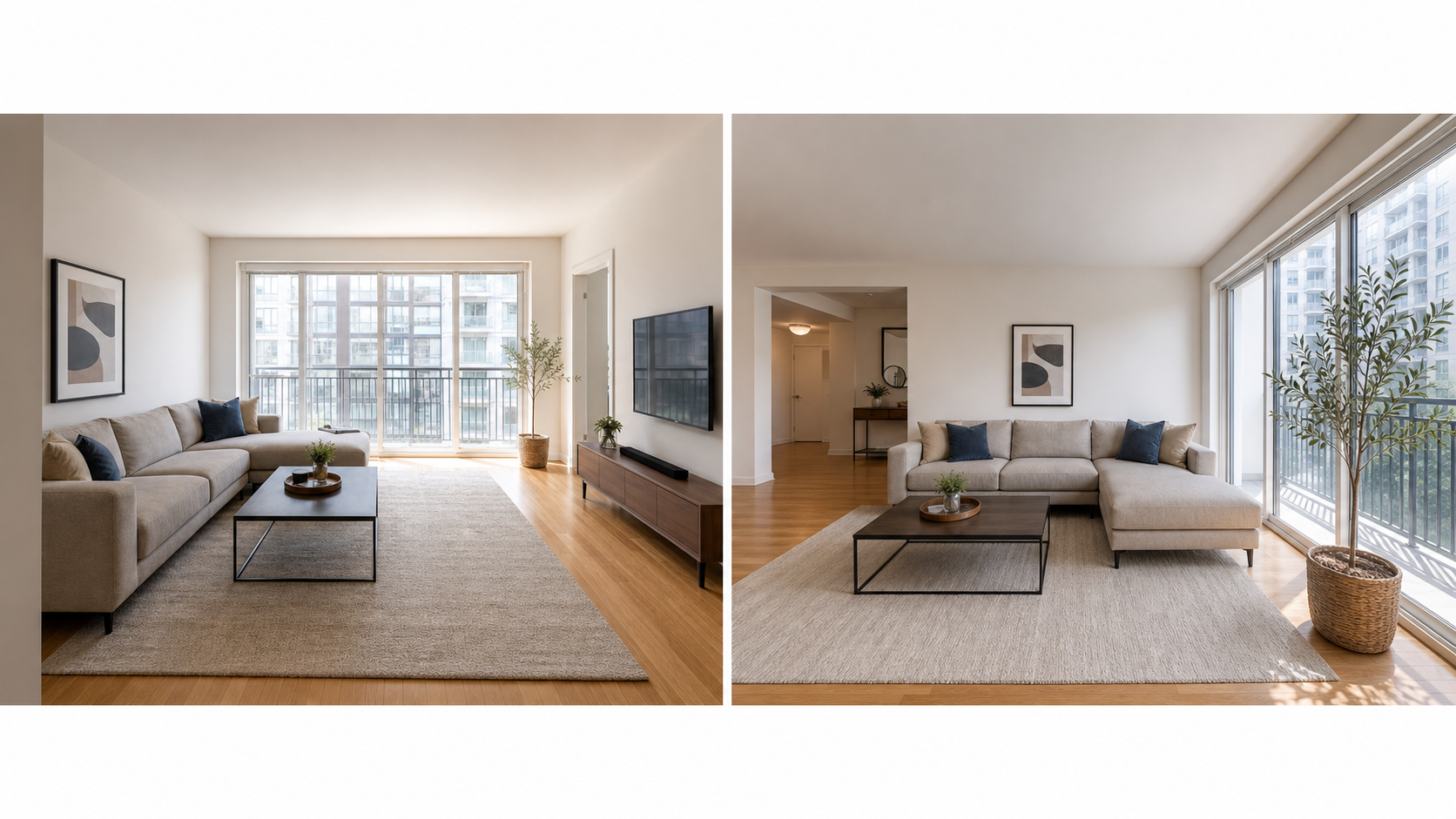
What makes condo listing photos different?
A condo listing is not only a room gallery; it is a building, location, amenity, and lifestyle story told in pictures. Buyers and renters are paying for two things at once: the private unit and the shared infrastructure around it, from the lobby and elevator to the gym, rooftop, and parking. Photos of a condo that show only the interior are telling half the story and usually the smaller half of the price.
That dual job changes the strategy. The unit photos have to compete with every other unit in the same or similar buildings, where floor plans may be nearly identical, so light, condition, view, and finishes become the differentiators. The building photos have to justify the fees and explain why this address instead of the one down the street. A strong condo gallery does both without exaggerating either.
What should you photograph inside the unit?
Inside the unit, photograph the living area, kitchen, every bedroom, bathrooms, closets, laundry, balcony, and the view from the main windows, keeping room proportions honest. Because competing units often share the same floor plan, the differentiators deserve extra care: natural light at its best hour, the actual finishes and appliance condition, and the view shot exposed so the window is not a white blur. Shoot from doorways and corners that explain how rooms connect, keep vertical lines straight, and avoid extreme wide-angle lenses that make an 800-square-foot unit read as 1,100. If the unit has upgrades relative to the building standard, such as renovated bathrooms or new flooring, give those their own clear frames, since they are exactly what a buyer's agent will ask about.
Which building amenities deserve photos?
Photograph every shared feature that meaningfully affects value, and skip the ones nobody weighs. A useful test: would a buyer or renter mention it when describing the building to a friend? Gym, pool, rooftop, parking, and the lobby almost always pass that test; a dated business center or an underused lounge usually does not. Shoot amenities the way you shoot rooms: real size, current condition, honest angles, ideally at a quiet time. If an amenity carries a separate fee, is seasonal, or is under renovation, either say so in the listing text or leave the photo out; an amenity photo is a promise, and broken amenity promises are a common source of disputes.
| Amenity | Include? | Notes |
|---|---|---|
| Exterior and lobby | Always | Sets the quality expectation for everything else |
| Gym, pool, rooftop | Always, if present | Show real size and current condition |
| Parking and bike storage | Almost always | Deeded or assigned parking is a headline in many markets |
| Package room, mail area | When notable | Matters to frequent online shoppers |
| Courtyard, lounge, coworking | When actually used | Skip if dated or effectively closed |
| Hallways and elevator | Only if strong | Weak common areas hurt more than they help |
What order should a condo gallery follow?
Order the gallery as a guided tour: hook, unit story, building story, practical close. The hook earns attention, the unit walkthrough answers the core what-am-I-buying question, the building section justifies the address and the fees, and the practical close settles logistics like parking. Resist opening with the rooftop pool when the unit itself is the product; leading with shared amenities and burying the unit reads as compensating. The exception is when an amenity or a view genuinely is the listing's headline, in which case it belongs up front and the photos should deliver on it.
- Lead with the strongest honest image, usually the best living-area shot or the view.
- Walk the unit in layout order: living area, kitchen, bedrooms, bathrooms.
- Insert the view and balcony where they naturally occur in the walkthrough.
- Show storage, laundry, and any unit upgrades.
- Transition to the building: exterior, lobby, entry.
- Present amenities in descending order of value to your likely buyer or renter.
- Close with parking, practical access, and neighborhood context if relevant.
If one amenity is central to the listing, such as a resort-level pool, pull it forward near the top. The logic mirrors rental photo ordering with the building layer added.
How do the rules differ for sales versus rentals?
Sales listings carry stricter formal obligations. Agents marketing a condo are bound by the NAR Code of Ethics, where Article 12 requires presenting a true picture in advertising and Article 2 prohibits exaggerating or concealing pertinent facts about the property. Buyers also inspect harder than renters: finishes, views, and amenities in the photos will be checked against reality during showings and inspections, so any flattering distortion gets caught and can sour a deal. Rental condo listings face lighter formal rules but the same practical enforcement through tours, reviews, and early terminations. Starting January 1, 2026, California additionally requires real estate licensees to disclose digitally altered listing images and provide access to the originals, while exempting routine edits like lighting, color, cropping, and sharpening.
See when edited listing photos require disclosure for details on that law and platform policies.
How should you edit condo photos safely?
Keep edits inspection-safe, meaning nothing in the photo should contradict what a visitor sees at a showing. Correcting exposure, white balance, crop, and perspective, and making unit and amenity shots feel like one consistent gallery, are all routine and safe. Property Photo AI is useful here because its touch-up mode normalizes lighting and color across a mixed set, shot on different days and floors, while preserving the real layout, fixtures, and views. Off-limits: enhancing the view, hiding wear that a buyer would find, altering finishes, or making rooms look larger. Condo shoppers compare units within the same building, sometimes with identical floor plans, which makes dishonest edits unusually easy to detect and unusually damaging when they are.
FAQ
What makes condo photos different from house photos?
A condo listing sells two things at once: the private unit and the building around it. The gallery has to cover amenities, exterior, entry, parking, and views alongside the rooms, because a large part of what the buyer or renter pays for sits outside the unit door.
Should condo listings include shared amenities?
Yes, when those amenities are genuinely available to the resident. A gym, pool, rooftop, or package room is part of the real value. Photograph them as they actually are; do not showcase amenities that are closed, restricted, or require fees you have not mentioned.
What photo should lead a condo listing?
Lead with the strongest unit interior or the view, whichever is the honest headline of the listing. A spectacular view earns the first slot; otherwise open with the best living-area shot and let building amenities appear after the unit story.
How many photos should a condo listing have?
Plan on 15 to 25: the full unit walkthrough plus one photo per meaningful shared amenity, the exterior, entry, and parking. Sales listings usually justify the higher end because buyers inspect finishes and views more closely than renters.
Can I edit condo photos before listing them?
Routine corrections such as lighting, color, cropping, straightening, and sharpening are normal. Edits that change finishes, views, or what the unit contains are a different category; in California, a new disclosure law for altered listing images applies to licensees starting in 2026.
How Property Photo AI helps
Property Photo AI helps landlords, Airbnb hosts, property managers, and real estate teams turn existing room photos into cleaner listing-ready images. It is built for realistic touch-ups: better light, color, crop, sharpness, and small-distraction cleanup without changing the actual room layout, fixtures, view, or condition.
Sources
- Airbnb Help Center: Taking great photos of your listing
- Airbnb Help Center: Setting up a photo tour for your home listing
- Airbnb Help Center: Add visual descriptions to photos in your listing
- Airbnb Help Center: Confirming photo accuracy for listings
- Airbnb Help Center: Offer for free Airbnb photography
- Google Business Profile
- Google Business Profile Help: Manage your hotel's details
- Booking.com Partner Hub: Understanding photo requirements for your property
- Booking.com Partner Hub: Improve visibility and ranking
- Vrbo Help: Photo guidelines
- Zillow Rental Manager Help: Photo Uploading Tips
- Zillow Rental Manager: Post a listing
- Zillow Rental Manager Help: Why is my primary photo different?
- Craigslist Help: Creating a posting
- Craigslist Help: Images
- Airbnb Help Center: Pricing your home listing
- Airbnb Help Center: Compare similar listings
- Airbnb Help Center: How search results work