
Do you have to disclose AI-edited listing photos?
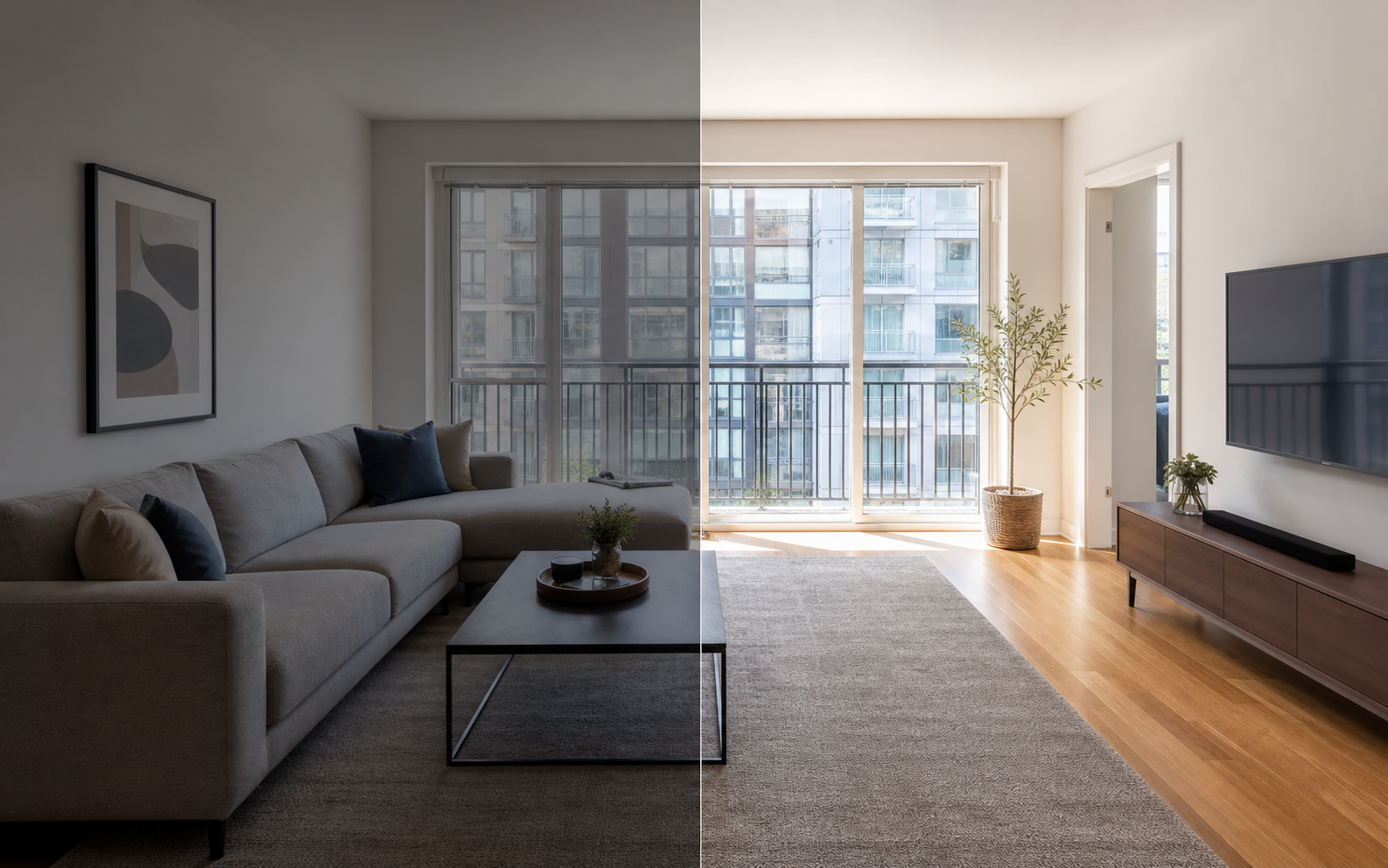
For a growing number of listings, yes, and the answer depends on what the edit changed. If your edit only corrected lighting, white balance, color, exposure, crop, angle, or sharpness, the major rules treat it as normal photo editing and no disclosure is required. If your edit added, removed, or changed real elements of the property, such as furniture, fixtures, flooring, paint color, landscaping, or the view through a window, disclosure is increasingly mandatory.
California's AB 723 made this a legal requirement for licensees starting January 1, 2026, MLSs have published their own altered-image rules, and the NAR Code of Ethics has long required a true picture in advertising. The practical standard for 2026 is simple: enhance honestly, label anything that changed, and keep your originals.
What does California's AB 723 actually require?
AB 723, which added Section 10140.8 to California's Business and Professions Code, took effect January 1, 2026. It applies to real estate brokers, salespersons, and anyone acting on their behalf who uses digitally altered images to advertise property for sale. When an ad includes a digitally altered image, it must carry a statement disclosing the alteration that is reasonably conspicuous and located on or adjacent to the image, plus a link, URL, or QR code pointing to a publicly accessible copy of the original, unaltered photo. On websites the licensee controls, the unaltered images must be included directly or by link.
The law defines a digitally altered image as one changed through photo editing software or artificial intelligence to add, remove, or change elements of the property, and it expressly excludes common adjustments like lighting, color correction, cropping, and straightening that do not change how the property is represented.
Which edits count as digitally altered under AB 723?
The dividing line is whether the edit changes what the property appears to contain or look like, not whether AI was involved.
| Edit | AB 723 treatment | What to do |
|---|---|---|
| Brightness, exposure, white balance, color correction | Exempt when the property is represented accurately | No disclosure needed |
| Cropping, straightening, angle correction, sharpening | Exempt when the property is represented accurately | No disclosure needed |
| Virtual staging (adding or removing furniture) | Digitally altered | Disclose on or next to the image and link the original |
| Changing paint, flooring, fixtures, or appliances | Digitally altered | Disclose and link the original |
| Editing landscaping, hardscape, or window views | Digitally altered | Disclose and link the original |
| Removing damage, stains, or defects | Digitally altered, and a misrepresentation risk | Do not do this in listing photos |
What are MLSs doing about AI-edited photos?
California MLSs have translated AB 723 into concrete listing rules, and MLSs in other states have published similar altered-image policies. CRMLS, the largest MLS in the country, requires agents to label altered photos with terms like digitally enhanced, digitally altered, or virtually staged in the photo description field, and to place the original, unaltered version of each altered photo immediately before or after it in the listing; it also prohibits AI-generated landscaping images outright. SDMLS and MLSListings have published their own AB 723 requirements along the same lines.
Even outside California, many MLSs already required virtual staging labels, and those labels travel with the listing when it syndicates to Zillow, Realtor.com, and Redfin.
What do NAR's ethics rules say about edited photos?
The NAR Code of Ethics does not name AI, but two articles cover the same ground. Article 12 requires REALTORS to be honest and truthful in real estate communications and to present a true picture in advertising, marketing, and other representations, and its standards of practice prohibit misleading images. Article 2 prohibits exaggerating, concealing, or misrepresenting pertinent facts about a property. NAR's legal staff has cautioned members against posting AI-altered photos to the MLS without clear disclosure, and its published guidance treats color and exposure correction differently from material changes like added furniture or new flooring. Ethics complaints are a real enforcement path even where no state statute applies.
Do rental platforms like Airbnb and Zillow require disclosure?
Short-stay and rental platforms enforce accuracy rather than a disclosure statute. Airbnb's help content on photo accuracy tells hosts that listing photos should reflect the real space, and guests who arrive to something different can raise complaints that lead to refunds and review damage. Vrbo's photo guidelines reject watermarked or text-overlaid images, so labels there belong in captions. The safest cross-platform habit is one standard: never publish an image that shows the property containing something it does not contain, and when you do stage virtually where a platform allows it, say so in the caption.
For a platform-by-platform breakdown, see virtual staging disclosure rules by platform.
How do you disclose AI edits without hurting the listing?
Disclosure done well reads as professionalism, not as a warning label. Buyers and guests respond badly to surprises, not to honesty. A clean workflow looks like this:
- Keep every original photo in a dated folder before you edit anything.
- Use routine corrections freely: exposure, white balance, color, crop, straightening, sharpening.
- If an image adds, removes, or changes real elements, label it on or adjacent to the image, for example "Virtually staged."
- Place or link the original, unaltered photo next to the altered one where the platform allows it.
- Repeat the disclosure in the listing remarks or caption so it survives syndication.
- Re-check labels after the listing goes live on each platform.
Property Photo AI is built for the exempt side of this table: realistic touch-ups to lighting, color, crop, and sharpness that preserve the real layout, fixtures, views, and condition, keeping most of your gallery out of disclosure territory entirely. This article is general information, not legal advice; confirm current rules with your broker, MLS, or attorney.
FAQ
Do I have to disclose AI-edited listing photos?
Routine corrections such as lighting, color, cropping, straightening, and sharpening generally do not require disclosure. Edits that add, remove, or change real elements of the property, including virtual staging, generally do under California's AB 723, MLS rules, and NAR ethics standards.
What is California AB 723?
AB 723 is a California law effective January 1, 2026. It requires real estate licensees who advertise with digitally altered property images to include a reasonably conspicuous disclosure on or adjacent to the image and provide access to the original, unaltered photo through a link, URL, or QR code.
Does AB 723 apply to basic photo touch-ups?
No. The law excludes images where only lighting, sharpening, white balance, color correction, angle, straightening, cropping, exposure, or other common photo editing adjustments are made, as long as those adjustments do not change how the real property is represented.
Do Airbnb and Vrbo require AI disclosure?
Airbnb and Vrbo do not publish an AI-specific disclosure statute, but both expect photos to accurately reflect the space. Guests who arrive to a property that does not match the photos can raise accuracy complaints, so the safe practice is the same: enhance honestly and disclose anything that changed.
Is this article legal advice?
No. It is general information for hosts and agents based on published laws, MLS guidance, and ethics rules. Disclosure requirements vary by state, MLS, and platform, so confirm the current rules that apply to your listing with your broker, MLS, or attorney.
How Property Photo AI helps
Property Photo AI helps landlords, Airbnb hosts, property managers, and real estate teams turn existing room photos into cleaner listing-ready images. It is built for realistic touch-ups: better light, color, crop, sharpness, and small-distraction cleanup without changing the actual room layout, fixtures, view, or condition.
Sources
- California AB 723: Real estate: digitally altered images: disclosure (bill text)
- CRMLS Knowledgebase: California's Altered Image Law (CA AB 723) FAQs
- SDMLS: AB 723 Digitally Altered Images Requirements
- MLSListings: AB723 Altered Images Overview
- NAR: 2025 Code of Ethics and Standards of Practice
- NAR: Using AI to Enhance Listing Photos Can Be Legally Risky
- Airbnb Help Center: Confirming photo accuracy for listings