
Where is the line between enhancement and misrepresentation?
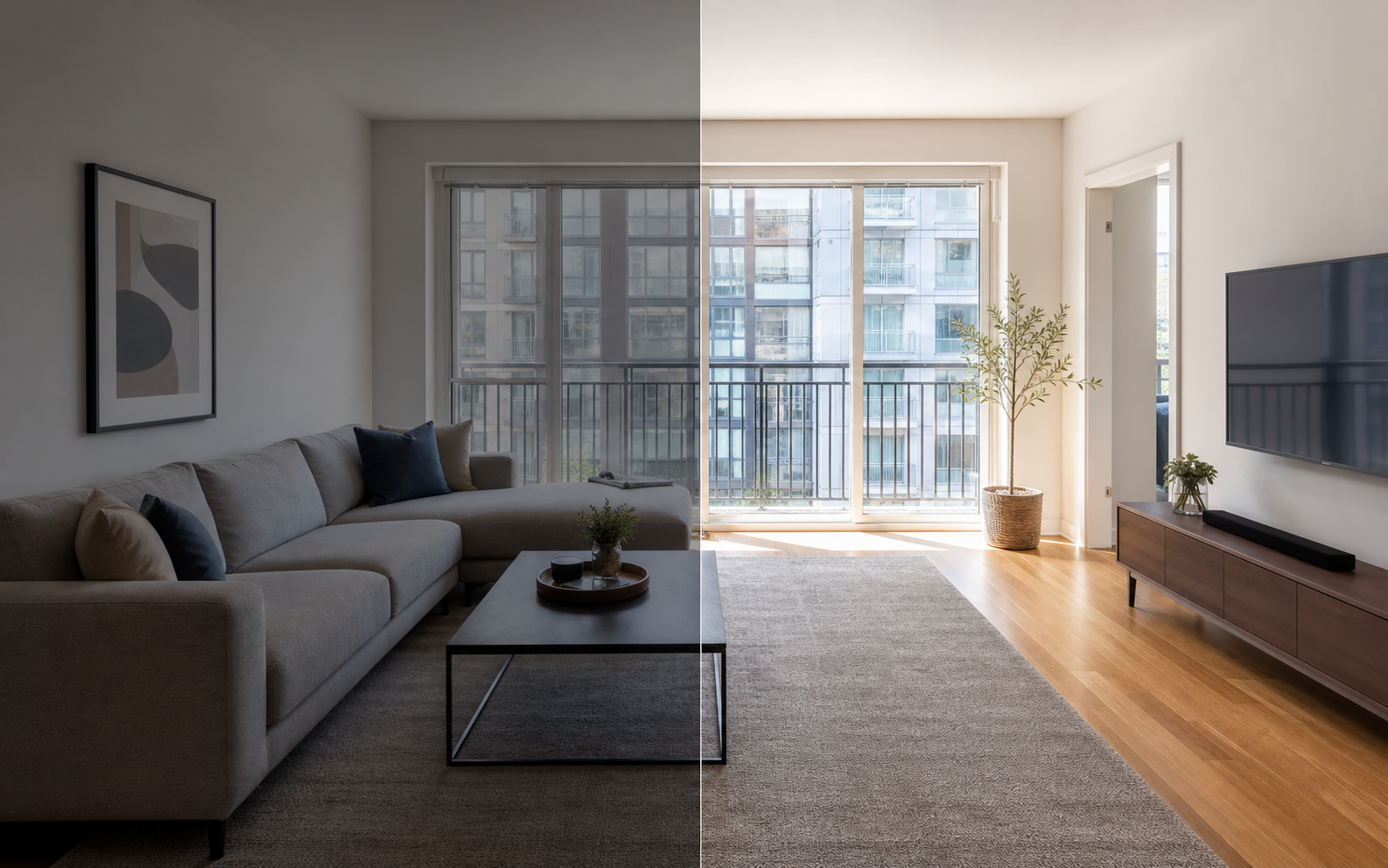
The line is representation, not technology. An edit is enhancement when the finished photo still shows what a person standing in the room would see: same layout, same contents, same condition, same view, just captured with better light, color, and framing. An edit becomes misrepresentation when the photo shows a property that does not exist: cleaner, larger, better equipped, or in better condition than reality.
Every major rulebook draws the line in the same place. California's AB 723 exempts lighting, color correction, cropping, straightening, and sharpening, and regulates edits that add, remove, or change elements of the property. NAR's Code of Ethics requires a true picture in advertising and prohibits concealing pertinent facts. Airbnb enforces photo accuracy through guest complaints. AI did not move the line; it just made both sides of it cheaper to reach, which is why disclosure rules arrived in 2026.
Which edits are safe, which need disclosure, and which are off-limits?
| Category | Examples | Status |
|---|---|---|
| Honest enhancement | Exposure, white balance, color correction, crop, straightening, sharpening, removing a temporary item like a trash bag or cord | Standard practice; no disclosure required |
| Disclosed alteration | Virtual staging of an empty room, decluttering renders, concept images shown to a seller | Allowed in many contexts with clear labels and access to originals |
| Misrepresentation | Removing damage, mold, stains, or wear; changing finishes, fixtures, or views; enlarging rooms; adding amenities that do not exist | Off-limits in listing marketing, disclosed or not |
The middle row is where judgment lives. A virtually staged photo of a real, accurately rendered room is a legitimate marketing tool when labeled. The same tool pointed at a cracked foundation is fraud with a caption.
Why is hiding defects different from cleaning up a photo?
Because the defect is a fact about the property, and the clutter is not. Removing a laundry basket from a bedroom photo changes nothing a buyer relies on; the basket leaves with the seller. Removing a water stain changes the buyer's understanding of the roof. Condition, size, layout, fixtures, systems, and views are pertinent facts, the kind NAR's Article 2 prohibits exaggerating, concealing, or misrepresenting, and the kind that buyers, inspectors, and appraisers will independently verify.
That verification is the practical reason the line holds. A misleading listing photo does not survive contact with a showing, an inspection, or a guest's arrival. What it does do is anchor expectations that reality then breaks, which produces cancelled deals, bad reviews, refund claims, and, in the worst cases, misrepresentation lawsuits and license complaints. A photo can only sell the first visit; the property has to sell the rest.
What rules and consequences actually apply?
Several layers apply at once, and they stack. State law: California's AB 723 requires conspicuous disclosure and access to originals for digitally altered images in sale advertising, and violations of the licensing law carry real penalties; other states enforce general misrepresentation and consumer protection law against deceptive marketing. MLS rules: altered-image policies allow photo removal, correction requirements, and fines. Ethics: NAR Articles 2 and 12 support complaints against members whose marketing misleads. Platforms: Airbnb, Vrbo, and Booking.com resolve photo-accuracy disputes in the guest's favor often enough that misleading galleries are self-defeating. Civil exposure: a buyer or guest who relied on a doctored image has a straightforward story to tell.
None of these regimes punishes good photography. All of them punish photographs of a property that does not exist.
How do you keep AI edits on the right side of the line?
- Archive originals before editing, so you can always show what the camera saw.
- Write down what changed in each edited image, even if it is just exposure and crop.
- Apply the standing-in-the-room test: would a visitor feel the photo told the truth?
- Never edit condition: damage, wear, stains, and defects stay in the photo or get fixed in the property.
- Label anything that adds, removes, or changes real elements, and link the original where required.
- Check your MLS and state rules before publishing, and re-check when they update.
Property Photo AI is deliberately built for the first row of the table: its touch-up mode corrects lighting, color, crop, and sharpness while preserving layout, fixtures, views, and condition, so the default output stays in honest-enhancement territory. Whatever tool you use, the goal is the same: photos that make the real property easier to evaluate, not a different property to want.
For a publish-ready process, use the disclosure-safe AI enhancement checklist. This article is general information, not legal advice.
FAQ
Is it legal to edit real estate listing photos with AI?
Yes. Editing tools are legal, and routine corrections like lighting, color, crop, and sharpening are treated as normal photography. Legal and ethical risk starts when edits change what the property appears to contain or its condition, especially without disclosure.
Which photo edits count as misrepresentation?
Edits that make the property appear different from reality in ways a buyer or guest would rely on: removing damage or defects, changing finishes or fixtures, altering views, faking room size, or adding features the property does not have. Disclosure duties aside, these create classic misrepresentation exposure.
Is brightening a dark room misleading?
Generally no. Correcting exposure so a photo shows what a person standing in the room would see is standard practice, and laws like California's AB 723 expressly exempt lighting and color correction. It becomes a problem only when the edit makes the room read differently than it does in person.
Can a seller or host be liable for photos their photographer edited?
The person advertising the property is responsible for its marketing. Agents and hosts should know what edits were made to their gallery, keep originals, and apply required labels regardless of who performed the edit.
Does disclosure fix a misleading photo?
Disclosure fixes hidden alteration; it does not fix deception. A labeled virtual staging image of a real room is fine. A labeled photo that removes water damage still misrepresents condition, because the defect exists whether or not the edit is disclosed.
How Property Photo AI helps
Property Photo AI helps landlords, Airbnb hosts, property managers, and real estate teams turn existing room photos into cleaner listing-ready images. It is built for realistic touch-ups: better light, color, crop, sharpness, and small-distraction cleanup without changing the actual room layout, fixtures, view, or condition.
Sources
- California AB 723: Real estate: digitally altered images: disclosure (bill text)
- NAR: 2025 Code of Ethics and Standards of Practice
- NAR: Using AI to Enhance Listing Photos Can Be Legally Risky
- NAR: Are You Catfishing Buyers With Picture-Perfect Real Estate Photos?
- CRMLS Knowledgebase: California's Altered Image Law (CA AB 723) FAQs
- Airbnb Help Center: Confirming photo accuracy for listings